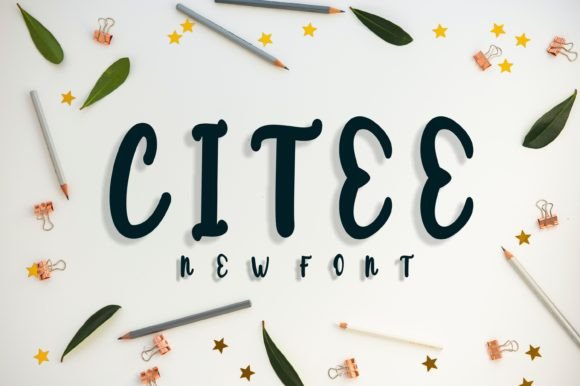
Citee Display Font Review for Crafters and Sellers
I opened my design file for a new candle label and started placing the brand name across the top in a few different typefaces. The fragrance name needed to feel soft but intentional, and the whole label had to work at just two inches wide on a matte glass jar. I cycled through my usual go-to fonts and nothing clicked. Then I dropped in Citee, a display font included in my growing library of creative fonts, and the entire composition came together in seconds. The letterforms had exactly the kind of graceful presence I wanted for a product that lives on a kitchen counter or bedside table. This kind of moment is why I keep testing new typefaces on real merchandise, and Citee earned a permanent spot in my workflow after just a few projects.
Citee for Candle Labels and Product Packaging
Citee works beautifully as a display font for short product names, brand titles, and decorative wording on packaging. When I tested it on a series of candle labels, the clean but expressive lettering gave each scent name a polished, boutique feel. The font held up well at medium sizes on both paper labels and vinyl decals, and the spacing between characters stayed consistent even when I adjusted tracking for narrower jars. For handmade sellers who want their packaging to feel elevated without looking overly fussy, Citee delivers a refined look that photographs well for shop listings and social media previews. I also tried it on ingredient lists and small disclaimers, and while it remains readable at slightly smaller sizes, this font truly shines when given enough room to breathe. Use it for the hero text on your packaging and pair it with a simple sans serif for the fine print, and your products will communicate quality at a glance.
Using Citee for Wedding Invitations and Stationery
Wedding stationery requires a font that feels special but remains easy to read across different printed pieces. I designed a full invitation suite mockup using Citee for the couple names and the phrase together with their loved ones, and the result was exactly the kind of warm elegance that couples look for. The display font handled the main headline beautifully on the invitation card itself, and I also used it on the response card header and the details insert title. Because Citee is a display font rather than a text face, I kept the body copy in a clean serif, which created a balanced contrast that felt intentional and professional. For invitation designers who create digital templates or printed suites, this typeface adds a handmade quality that stands out without competing with the other design elements. I especially liked how it looked on envelope addressing when printed at a larger point size, giving each piece a custom calligraphy-like impression without the time investment.
Citee for Printable Wall Art and Home Decor Signs
Printable wall art is one of the most forgiving formats for testing a new font, and Citee exceeded my expectations in this category. I created a set of typographic prints with short quotes and single words, and the display font brought a soft, artistic energy to each design. The letterforms have a natural rhythm that makes even a single word feel like a complete composition, which is exactly what buyers want when they shop for instant download wall art. I also tested Citee on farmhouse-style signs and decorative wood cutouts using my cutting machine. For larger signs, the font cut cleanly in vinyl and adhered well to painted wood. For smaller pieces, I recommend scaling up slightly so the finer details in the lettering remain intact. If you create seasonal decor or motivational prints, this font gives you a versatile tool that works across multiple holidays and themes without feeling repetitive.
Citee Readability for Cutting Machines and Small Stickers
Every maker who works with a Cricut or Silhouette knows that not every pretty font translates well to physical materials. I tested Citee on several sticker sheets, including small round labels and medium-sized die-cut decals, and the results were mostly very good. The display font cut cleanly in standard adhesive vinyl at sizes above one inch, and the internal spaces stayed open enough to weed without frustration. For very small stickers under half an inch, some of the finer details in the lettering began to lose definition, so I recommend reserving Citee for medium to large sticker designs where the character shapes can fully express themselves. On paper stickers and matte vinyl, the font printed crisply and retained its charm even on textured stock. For planners and journal makers who create decorative sticker sheets, this font works well for header words, days of the week, and short labels. Just test your smallest size on a sample cut before committing to a full production run.
Citee Font Pairing Ideas for Brand Consistency
Building a cohesive brand identity across products, listings, and packaging becomes easier when you have a reliable font pairing strategy. Citee pairs naturally with clean sans serif fonts like Open Sans or Lato for body text and product descriptions. I also tested it alongside a soft handwritten font for a boutique tag design, and the contrast between the structured display lettering and the loose script created a layered, artisanal look. For sellers who create digital templates, social media graphics, and physical products under the same brand, using Citee as the hero typeface across all touchpoints builds visual recognition over time. The display font works well on website headers, mailing labels, and even on small branding elements like hang tags and belly bands. When pairing, keep the secondary font simple so Citee remains the focal point. This approach gives your shop a polished, intentional appearance that makes customers more likely to remember your products and return for future purchases.
Citee Commercial Licensing for Handmade Products
Before using any font on items you plan to sell, checking the commercial license terms is a necessary step that protects both your work and the designer rights. Citee is available under standard commercial licensing for most handmade and printable use cases, but I recommend verifying the specific terms at the point of purchase. If you create physical merchandise such as mugs, shirts, tote bags, signs, or packaging that includes the font as part of the design, the license typically covers these production runs. For digital downloads like editable template files, invitations, or printables where the font is embedded in a flattened PDF or PNG, the same licensing usually applies. If you plan to include the font in a file that allows customers to edit text themselves, you may need an extended license or a separate embedding agreement. Understanding these details upfront keeps your shop compliant and allows you to use Citee confidently across your entire product line without worrying about future restrictions.
After working with Citee on multiple real product designs, from candle labels and wedding stationery to wall art and boutique tags, I can recommend it to any maker or seller who wants a display font with genuine character. It brings a refined, creative energy to every project without demanding complicated design adjustments. Add it to your fonts library, test it on your own products, and let it help you create the kind of designs that customers notice and remember.